
Navigating the world of digital transactions requires understanding how credit card processing works; this guide illuminates the essential aspects for businesses today.
What is Credit Card Processing?
Credit card processing is the complex series of steps merchants undertake to accept card payments from customers. It begins when a customer presents a credit or debit card, initiating an authorization request. This request travels from the merchant, through an acquirer (the merchant’s bank), to the card network (like Visa or Mastercard), and finally to the card issuer (the customer’s bank).
The issuer approves or declines the transaction, sending the response back through the same channels. Upon approval, funds are transferred, typically involving multiple parties and incurring various fees. Essentially, it’s a secure electronic conversation ensuring funds move from the customer’s account to the merchant’s, enabling seamless commerce.
Why is Understanding Credit Card Processing Important?
Grasping credit card processing is crucial for businesses of all sizes, directly impacting profitability and customer experience. Without this knowledge, merchants risk overpaying for processing fees, potentially eroding margins significantly. Understanding the different pricing models – interchange-plus, tiered, and flat-rate – empowers informed decision-making.
Furthermore, awareness of security protocols like PCI DSS compliance is vital to protect sensitive cardholder data and avoid costly breaches. A solid understanding also facilitates negotiating better rates with processors and analyzing transaction data to optimize costs. Ultimately, it’s about control, efficiency, and safeguarding your business.

The Credit Card Processing Ecosystem
The system involves several key players: issuing banks, acquiring banks, and card networks, all working together to authorize and settle transactions efficiently.
Key Players: Issuers, Acquirers, and Networks
Issuing banks provide cards to consumers and manage their credit lines, bearing the risk of cardholder default. Acquirers, also known as merchant banks, offer payment processing services to businesses, enabling them to accept card payments. They handle the transaction between the merchant and the issuing bank.
Card networks – like Visa, Mastercard, American Express, and Discover – act as intermediaries, establishing the rules and infrastructure for processing transactions. They don’t directly issue cards or process payments but facilitate the communication and data exchange between issuers and acquirers. These networks set interchange rates and ensure security standards are met. Understanding each player’s role is crucial for navigating the complexities of credit card processing and optimizing costs.
Interchange Fees: The Core Cost
Interchange fees represent the largest component of credit card processing costs, a fee paid by the acquiring bank to the issuing bank for each transaction. These fees are set by the card networks (Visa, Mastercard, etc.) and vary based on numerous factors, including card type, transaction type, and merchant category code.

Higher-risk cards or transactions typically incur higher interchange fees. Merchants don’t directly negotiate these fees; they are a pass-through cost. Understanding interchange is vital because it significantly impacts profitability. Processors add their markup on top of interchange, making it essential to choose a pricing model that provides transparency into these core costs for effective cost management.
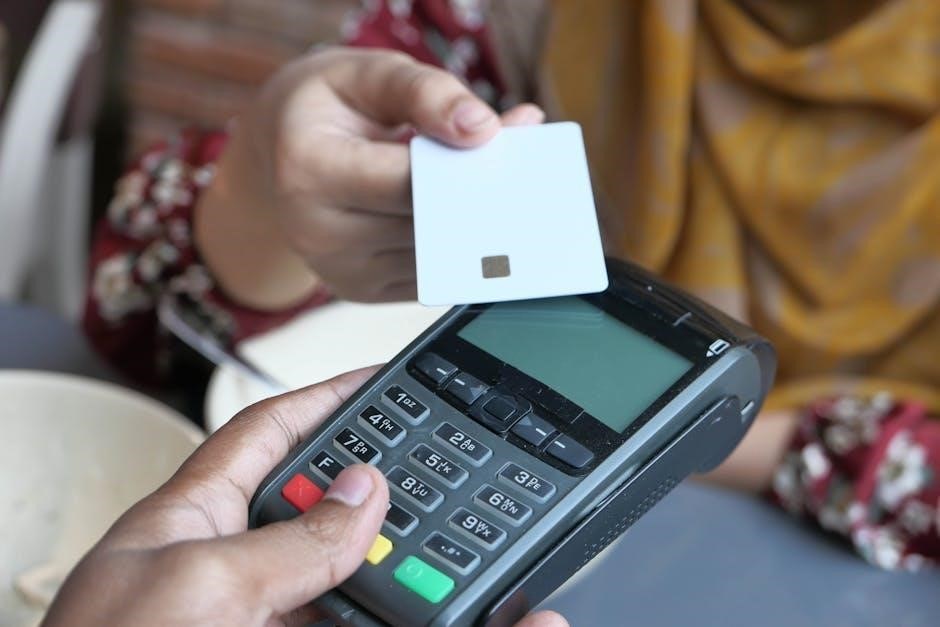
Credit Card Processing Fees: A Deep Dive
Exploring various pricing structures—interchange-plus, tiered, and flat-rate—is crucial for businesses to understand the true costs associated with accepting card payments.
Interchange-Plus Pricing
Interchange-plus pricing is often considered the most transparent model, offering businesses a clear view of the costs involved in credit card processing. This method involves passing through the actual interchange fees – set by card networks like Visa and Mastercard – directly to the merchant, plus a fixed percentage or per-transaction fee charged by the processor.
This structure allows for predictable costs, as the processor’s markup is clearly defined. Businesses can analyze transaction data to identify potential savings and optimize their acceptance strategies. While it may not always be the absolute cheapest option for every business, interchange-plus pricing provides greater cost control and insight compared to bundled or tiered pricing models, ultimately fostering a more informed approach to payment processing.
Tiered Pricing
Tiered pricing categorizes transactions into different tiers – typically qualified, mid-qualified, and non-qualified – each with its own associated rate. While seemingly simple, this model often lacks transparency, as the criteria for each tier aren’t always clearly defined. Transactions are automatically placed into a tier by the processor, potentially leading to higher fees than expected.
Qualified rates are the lowest, usually reserved for standard credit card transactions. Mid- and non-qualified rates increase as transaction characteristics deviate from the norm, such as card-not-present transactions or rewards cards. Businesses often find it difficult to predict which tier a transaction will fall into, making cost management challenging and potentially inflating overall processing fees.
Flat-Rate Pricing
Flat-rate pricing offers simplicity with a single processing fee for every transaction, regardless of card type or transaction characteristics. Popular providers like PayPal and Square often utilize this model, making it appealing for businesses seeking predictable costs. However, this convenience comes at a price; flat rates are generally higher than interchange-plus pricing, especially for businesses with a high volume of low-value transactions.
While easy to understand, flat-rate pricing doesn’t reflect the actual interchange fees charged by card networks. It’s best suited for businesses processing smaller volumes or those prioritizing simplicity over minimizing costs; Carefully evaluate transaction patterns to determine if the predictability outweighs the potentially higher overall expense.
Hidden Fees to Watch Out For
Beyond the advertised rates, numerous hidden fees can inflate credit card processing costs. These include statement fees, PCI compliance fees (even if not utilizing advanced security measures), address verification system (AVS) fees, and chargeback fees – which can be substantial. Some processors also impose early termination fees, effectively locking businesses into lengthy contracts.
Carefully scrutinize the processor’s agreement for any mention of these potential charges. Ask for a detailed breakdown of all fees and understand the terms surrounding chargebacks and contract termination. Transparency is key; a reputable processor will readily disclose all associated costs upfront, avoiding unwelcome surprises down the line.

Choosing a Credit Card Processor
Selecting the right processor demands careful evaluation of rates, robust security measures, and dependable customer support for seamless transactions and peace of mind.
Factors to Consider: Rates, Security, and Support
When selecting a credit card processor, several key factors demand careful consideration. Rates are paramount; understanding interchange-plus, tiered, and flat-rate pricing models is crucial to avoid hidden fees and optimize costs. Robust security is non-negotiable, with PCI DSS compliance being a fundamental requirement to protect sensitive cardholder data and prevent costly breaches.
Equally important is the level of customer support offered. Businesses need reliable assistance to resolve issues quickly and efficiently, minimizing disruptions to sales. Look for processors offering 24/7 support via phone, email, or chat. Consider transaction fees, monthly costs, and any setup charges. A processor like Merchant One or Clover can provide options, but thorough comparison is vital.
Popular Credit Card Processors: A Comparison
The credit card processing landscape features numerous providers, each with unique strengths. Clover stands out with its integrated hardware and software solutions, ideal for businesses seeking a streamlined point-of-sale system. Merchant One offers competitive rates and a focus on small businesses, potentially reducing processing costs. CU Online provides secure online banking, facilitating easy account management and transaction monitoring.
Square is popular for its simplicity and mobile processing capabilities, suitable for businesses on the go. However, rates can be higher. Comparing these processors involves evaluating their pricing structures, security features, customer support, and integration capabilities. Consider your business needs and transaction volume to determine the best fit.

Security and Compliance
Protecting sensitive cardholder data is paramount; PCI DSS compliance and robust fraud prevention measures are crucial for maintaining trust and avoiding penalties.
PCI DSS Compliance: Protecting Cardholder Data
The Payment Card Industry Data Security Standard (PCI DSS) is a vital set of security standards designed to ensure that all companies that accept credit card payments protect cardholder data. Compliance isn’t optional; it’s a necessity to maintain a secure environment and avoid hefty fines and reputational damage.
This standard covers a wide range of security controls, including building and maintaining a secure network, protecting cardholder data, maintaining a vulnerability management program, implementing strong access control measures, and regularly monitoring and testing networks. Businesses must demonstrate annual compliance through self-assessments or, for larger merchants, through a Qualified Security Assessor (QSA) audit.
Understanding and adhering to PCI DSS requirements is a continuous process, requiring ongoing effort and investment in security infrastructure and employee training.

Fraud Prevention Measures
Proactive fraud prevention is crucial in credit card processing, safeguarding both businesses and customers. Several measures can significantly reduce risk, including Address Verification System (AVS) which confirms billing address matches cardholder records, and Card Verification Value (CVV) checks verifying card security code.
Implementing 3D Secure authentication, like Verified by Visa or Mastercard SecureCode, adds an extra layer of security by requiring cardholders to authenticate their identity with their issuing bank. Utilizing fraud scoring systems analyzes transactions in real-time, flagging potentially fraudulent activity based on various parameters.
Regularly monitoring transactions for suspicious patterns and employing tokenization—replacing sensitive card data with a non-sensitive equivalent—are also vital steps.

Modern Credit Card Processing Methods
Today’s businesses leverage diverse methods, including online gateways, mobile processing solutions, and virtual terminals, to seamlessly accept payments from customers.
Online Payment Gateways
Online payment gateways are crucial for e-commerce businesses, acting as the bridge between your website and the credit card processing network. They securely transmit sensitive cardholder data, ensuring transactions are processed safely and efficiently. Popular options include Stripe, PayPal, and Authorize.net, each offering varying features and pricing structures.
Choosing the right gateway involves considering factors like security protocols (PCI DSS compliance is essential), supported payment methods, integration capabilities with your existing platform, and transaction fees. Some gateways offer advanced fraud detection tools and customizable checkout experiences. Integration can range from simple copy-and-paste code snippets to more complex API integrations, depending on your technical expertise and website platform.
Mobile Payment Processing
Mobile payment processing empowers businesses to accept credit and debit card payments on the go, utilizing smartphones or tablets. This is ideal for businesses like food trucks, contractors, or those offering services at customer locations. Solutions like Square, Clover, and PayPal Here utilize card readers that connect wirelessly to mobile devices.
These systems typically involve a monthly fee for the card reader and per-transaction fees. Security is paramount, with these providers adhering to PCI DSS standards. Beyond simple card swipes, many offer features like inventory management, customer relationship management (CRM), and reporting. Choosing a provider depends on your specific needs, transaction volume, and desired features, ensuring a seamless and secure mobile payment experience.
Virtual Terminals
Virtual terminals provide a secure web-based interface for manually keying in credit card information, ideal for mail order, telephone order (MOTO) businesses, or situations where a physical card isn’t present. They eliminate the need for a physical card reader, offering a cost-effective solution for specific business models.
Typically, a merchant logs into a secure website provided by their processor and enters the card details. These systems often include features like address verification service (AVS) and card verification value (CVV) checks to mitigate fraud. Virtual terminals usually incur per-transaction fees, and may require a monthly fee depending on the provider. They are a crucial component for businesses needing flexible, remote payment acceptance capabilities.

The Future of Credit Card Processing
Innovation drives the evolution of payments, with EMV chip and contactless technologies reshaping transactions and enhancing security for consumers and merchants.
EMV Chip Technology and its Impact
EMV (Europay, Mastercard, and Visa) chip technology revolutionized card security, shifting from magnetic stripes to embedded microchips. These chips create a unique transaction code for each purchase, making counterfeiting significantly harder. This transition aimed to reduce fraudulent activity, particularly card-present fraud.
The implementation of EMV chips wasn’t without challenges; initially, merchants needed to upgrade their point-of-sale (POS) systems to chip-enabled terminals. However, the long-term benefits – reduced fraud liability and increased consumer confidence – outweighed the initial costs.
While EMV chips address card-present fraud, they don’t eliminate all risks. Card-not-present fraud (online transactions) remains a concern, driving the development of additional security measures like tokenization and 3D Secure authentication.
The Rise of Contactless Payments
Contactless payments, utilizing technologies like Near Field Communication (NFC), have surged in popularity, offering a faster and more convenient checkout experience. Customers simply tap their card or mobile device on a compatible terminal to complete the transaction. This method minimizes physical contact, a key driver during recent health concerns.
The adoption of contactless payments is fueled by mobile wallets like Apple Pay, Google Pay, and Samsung Pay, which store card information securely on smartphones. These wallets enhance convenience and often offer additional security features like tokenization.
Merchants benefit from quicker transaction times and potentially increased sales volume. However, ensuring POS systems are NFC-enabled and educating staff and customers are crucial for successful implementation.

Cost Optimization Strategies
Proactive analysis of transaction data and skillful negotiation with processors are key to minimizing credit card processing fees and maximizing profitability.
Negotiating Rates with Processors
Successfully negotiating credit card processing rates demands preparation and understanding your business’s transaction volume and risk profile. Don’t accept the initial quote; processors often have room for adjustment. Leverage competitive bids from multiple providers to demonstrate market value and encourage lower rates.
Focus on interchange-plus pricing for transparency, and scrutinize all fees beyond the stated rates. Question any ambiguous charges and request detailed breakdowns. Be prepared to discuss your processing history and potential for growth, as higher volumes often warrant better terms.
Remember, building a strong relationship with your processor can also lead to favorable negotiations. Regularly review your statements and proactively address any discrepancies to maintain a position of strength during rate discussions.
Analyzing Transaction Data
Diligent analysis of your credit card transaction data is crucial for cost optimization and fraud prevention. Regularly review reports to identify trends in transaction size, frequency, and card types. This insight reveals potential areas for rate negotiation with your processor, focusing on volume discounts or adjustments based on average ticket values.
Monitor for unusual activity – large transactions, multiple attempts, or transactions from high-risk locations – which could indicate fraudulent behavior.
Understanding chargeback ratios is also vital; high ratios can lead to increased fees and potential account termination. Data analysis empowers informed decisions, minimizing costs and safeguarding your business against financial losses.